Sweet · Bulgaria
Sweet Wine Barrel Aged
Villa Melnik — Struma River Valley
- Grape(s)
- Melnik 55
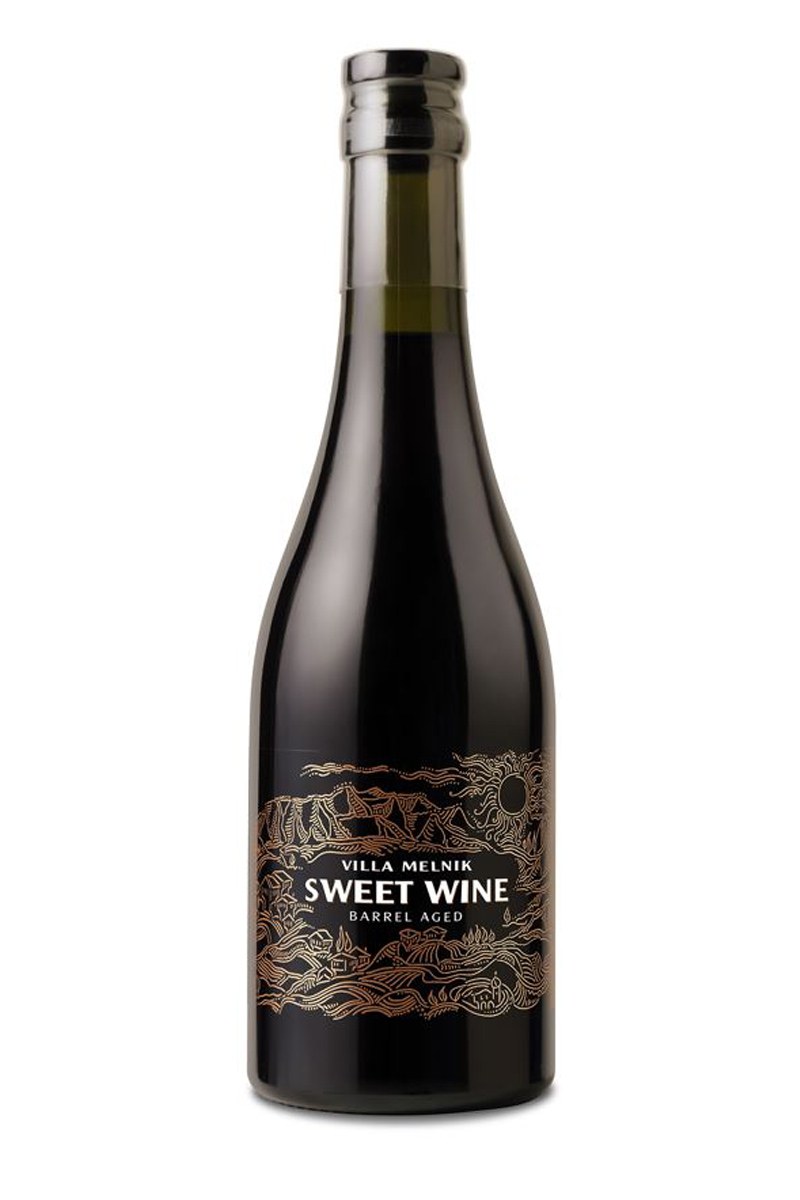
Bulgaria’s most interesting wine story right now isn’t happening in its most famous region — it’s happening in the Struma Valley, on a grape that was engineered on purpose rather than discovered by accident.
History
Villa Melnik was founded by Nikola and Lyubka Zikatanov, with vineyards planted around 2004 near Nikola’s home village of Kapatovo, in a family with its own generations-old winegrowing roots in the area. The winery building itself — a gravity-flow design, EU-funded — went up between 2011 and 2013, and the estate has since grown into one of Bulgaria’s most internationally recognised producers, ranked among the World’s 50 Best Vineyards in 2020, now run alongside the next generation of the family.
Region & terroir
The Struma River Valley is Bulgaria’s warmest and most distinctive wine region, its climate pulled toward Mediterranean by the Rupel Gorge, which funnels warmer air up from the Aegean. Vineyards here mostly sit on sandy loess over limestone, in a valley that was a freshwater lake in prehistoric times — soil young and varied enough that long, stable, warm autumns end up mattering more to the wine than the ground itself, giving grapes like this one the extended ripening season they need.
The grape
Melnik 55 was bred in 1963 at an experimental station in Sandanski, developed specifically to ripen earlier than its own parent grape while keeping some of its character. Genetic testing has since confirmed that parent as Shiroka Melnishka Loza, Melnik’s ancient indigenous vine, crossed with Valdiguié, a French variety — a tidier story than the older folk account of a four-way cross, though both versions circulate. Exactly why it’s called “55” isn’t something I could actually confirm anywhere, including in Bulgarian-language sources — worth admitting rather than inventing an explanation. What it does reliably, though, is give both structured dry reds and, as here, richly sweet late-harvest wine.
Winemaking
For a wine like this, grapes are left on the vine well past the main harvest, then dried further afterward to concentrate their sugars naturally, with nothing added to boost sweetness artificially. Barrel time on top of that drying process adds another layer entirely — oxidative, nutty, spiced notes building on top of the concentrated fruit, rather than the fresher, more fruit-forward character a sweet wine without oak contact would have.
Tasting notes
Nose: Caramelised nuts, fig jam, and dark chocolate, with a rich, coffee-like depth from the barrel.
Palate: Lusciously sweet but structured, dried fruit and toffee carried by real acidity rather than sitting flat.
Finish: Long, warm, and dessert-like, coffee and dark chocolate lingering well after the sweetness fades.
Serving & pairing
Serve cool, around 10–12°C, in a small glass. It’s a natural match for dark chocolate desserts, aged hard cheese, or simply on its own as an after-dinner pour.
Why it’s in the cellar
This bottle is a small piece of deliberate Bulgarian viticultural history — a grape built on purpose in a lab in 1963, still finding new things to do six decades later. It’s in the cellar as a reminder that not every great indigenous wine has to come from an accident of nature.
More from Villa Melnik