Orange · Bulgaria
Orange Wine
Villa Melnik — Struma River Valley
- Grape(s)
- Viognier, Keratsuda
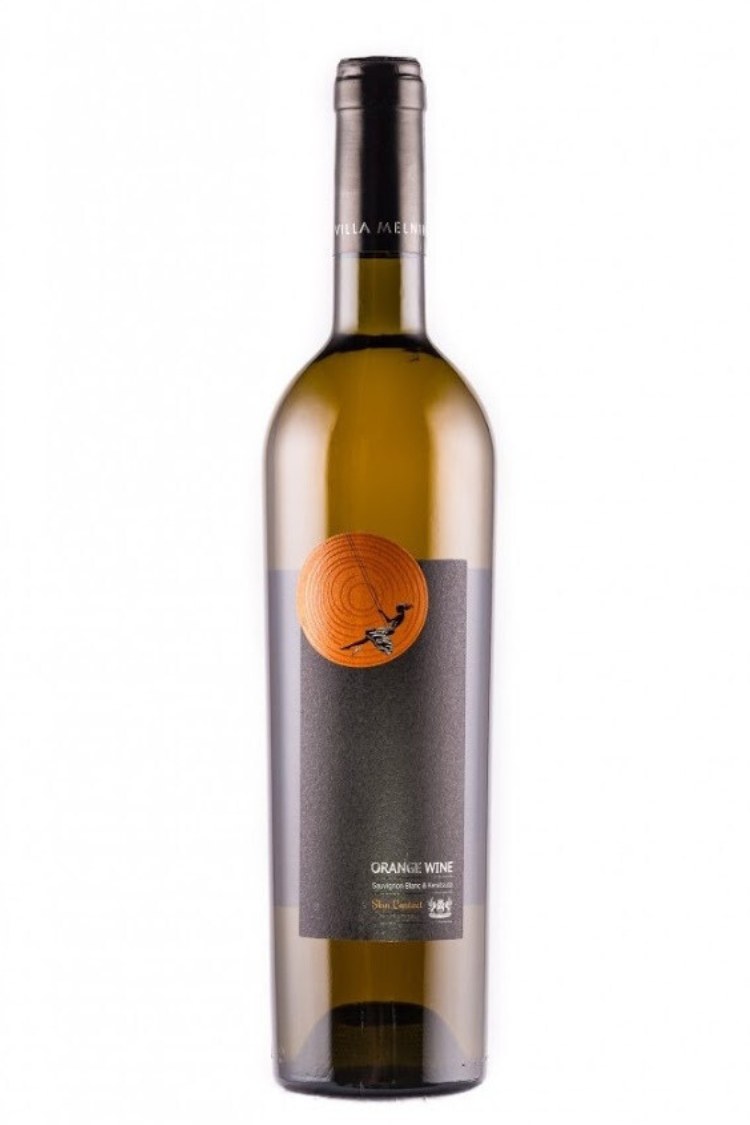
Orange wine gets treated as a trend everywhere else. Here it’s closer to a rescue mission — a way of keeping an almost-vanished grape relevant by doing something more interesting with it than anyone had tried before.
History
Villa Melnik was founded by Nikola and Lyubka Zikatanov, with vineyards planted around 2004 in the Struma Valley near Nikola’s home village of Kapatovo. The estate has built its reputation on exactly this kind of project — reviving and championing rare local material rather than only working with the varieties everyone already knows.
Region & terroir
The Struma River Valley is Bulgaria’s warmest wine region, its Mediterranean-leaning climate shaped by the Rupel Gorge funnelling air up from the Aegean, with vines mostly rooted in sandy loess over limestone. That warmth and long ripening season suit obscure, difficult indigenous varieties as well as they suit the region’s better-known reds.
The grape
Keratsuda is a genuinely rare indigenous white grape, documented under a scattering of regional synonyms, that grows in the wider Struma Valley on both the Bulgarian and Greek sides of the border — Villa Melnik isn’t the only producer working with it, but very few are, which makes any bottling of it worth paying attention to. Its actual parentage is unknown; nobody has traced where it comes from. Blended here with Viognier, an aromatic grape more usually associated with the northern Rhône, it makes an unlikely but effective pairing: Viognier’s perfume against Keratsuda’s rarity and textural weight.
Winemaking
Orange wine simply means a white wine made like a red — leaving the juice in contact with its skins rather than pressing them off immediately, for around two weeks in this case. That skin contact pulls tannin, colour, and texture out of grapes that would otherwise give a wine none of those things, turning a pale Viognier-Keratsuda blend into something structured and grippy instead.
Tasting notes
Nose: Quince, pear, and white cherry, with a tropical lift from the Viognier component.
Palate: Textured and grippy from the skin contact, orchard and tropical fruit carried on a structure closer to a light red than a typical white.
Finish: Medium-long, tannic rather than purely fruity — the skin contact showing through right to the end.
Serving & pairing
Serve lightly chilled, around 12–14°C — cold enough to stay fresh, warm enough to let the texture show. It’s a good match for richer, spiced, or fermented foods that a delicate white couldn’t stand up to — think grilled vegetables, aged cheese, or dishes with real umami depth.
Why it’s in the cellar
This bottle is here because it does something genuinely unusual with a grape that could easily have disappeared altogether. It’s a reminder that “rare” and “interesting” aren’t automatically the same thing — it takes a producer willing to actually do something with the rarity.
More from Villa Melnik