Spirit · Italy
Etichetta Nera
Vecchia Romagna — Emilia-Romagna, Italy
- Grape(s)
- Italian Brandy
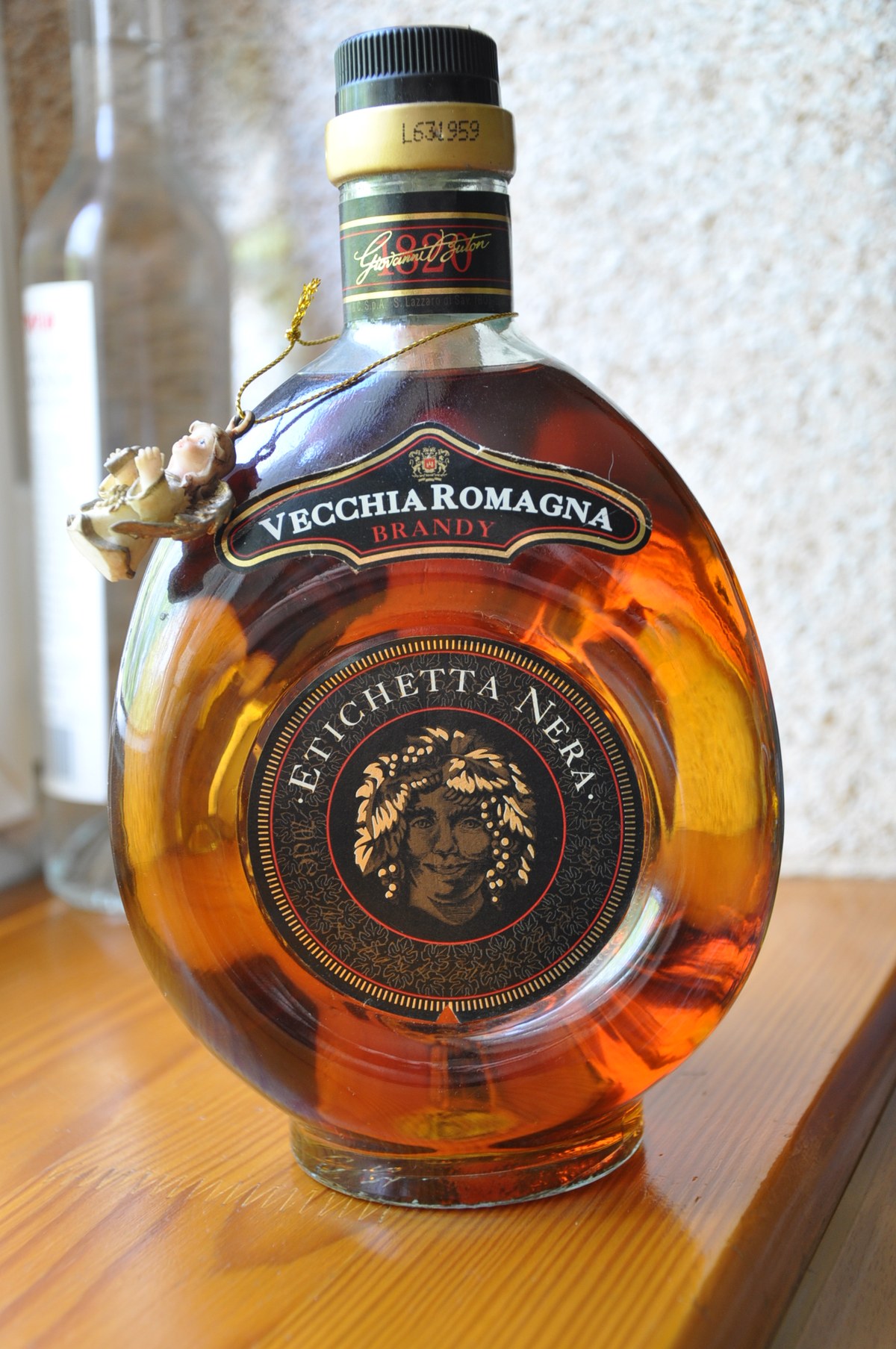
Brandy has an image problem outside Italy — treated as an afterthought next to Cognac, when the better Italian houses have been doing something genuinely different for two centuries rather than a cheaper version of the same thing.
History
The house was founded by Giovanni Buton in Bologna in 1820, distilling brandy from local Trebbiano grapes and becoming, within a decade or so, one of Italy’s first steam-powered distilleries. The “Vecchia Romagna” name and its distinctive triangular bottle date from 1939, adopted once Italian producers could no longer market their brandy under borrowed French terminology. It’s been owned by Gruppo Montenegro since 1999.
Region & terroir
Production is based in and around Bologna — technically in Emilia rather than Romagna proper, despite the name, which references the wider historic region rather than the exact production site. The base wine comes from Trebbiano, the same high-acid, neutral white grape grown across much of Italy — and, worth knowing, it’s ampelographically identical to Ugni Blanc, the grape Cognac itself is built on. The two brandies don’t actually start from different grapes; they diverge on regulation and method instead.
The grape
Trebbiano’s job here is the same job Ugni Blanc does in Cognac: a high-yielding, high-acid, relatively neutral base wine that distills cleanly without bringing much varietal character of its own along for the ride. The character in the finished brandy comes almost entirely from distillation and ageing, not from the grape.
Winemaking
Italian brandy operates under its own EU-recognised geographical indication, with a minimum ageing requirement of just one year in oak — considerably shorter than Cognac’s stricter rules. Vecchia Romagna’s own method blends spirit from two different distillation processes: a continuous column still and a traditional double pot still of the same type used in Cognac, a dual approach the house markets as distinctly its own rather than a straight copy of the French method. Ageing runs in two stages — first in smaller 400-litre French oak barriques for concentrated aromatic contact, then in much larger 4,000–5,000-litre Slavonian oak casks, a broad-grained oak from Croatia widely used across Italian wine and spirit ageing precisely because its low tannin extraction lets a spirit mature slowly without picking up an aggressive oak flavour. Etichetta Nera — the Black Label — sits above the entry-level Classica in the range, with extra time in that combined small-then-large oak regime giving it more structure and richness than the standard bottling.
Tasting notes
Nose: Vanilla, clove, and dried fruit, with a gentler oak presence than a young Cognac at a similar price point.
Palate: Round and warm, caramelised fruit and baking spice, structured but not aggressive — the large-format Slavonian oak keeps it from tasting over-worked.
Finish: Medium-long, warm, with a lingering note of dried fig and toasted spice.
Serving & pairing
Serve neat, at room temperature, in a tulip-shaped glass to concentrate the aromatics. It’s a natural after-dinner pour alongside dark chocolate or dried fruit and nuts, or simply on its own as a slow digestif.
Why it’s in the cellar
This bottle is here to make a point as much as to be drunk: that “Italian brandy” isn’t a lesser Cognac, it’s a different tradition entirely, and one that rarely gets a fair hearing outside its home country.