Sparkling · France
Rosé Brut NV
Taittinger — Champagne
- Grape(s)
- Chardonnay, Pinot Noir
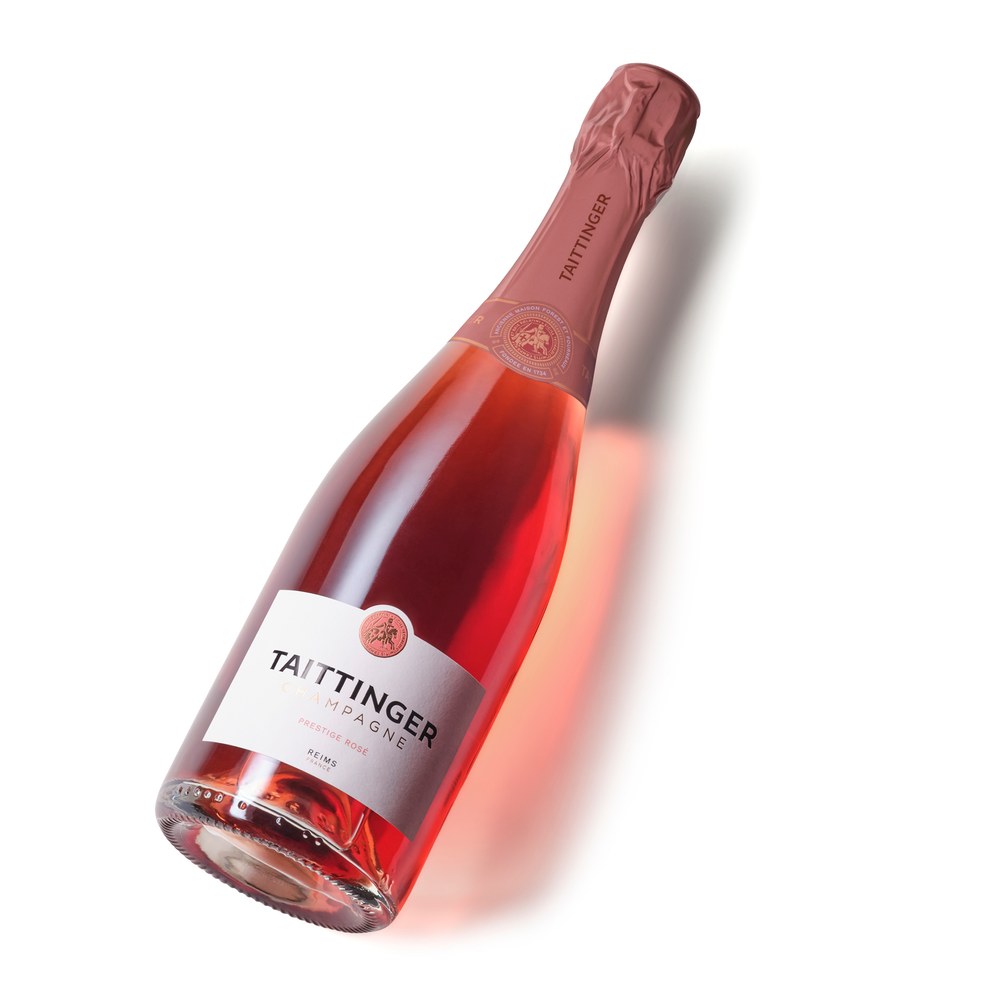
Rosé Champagne has a reputation for being the showy one — the bottle you reach for because of the colour before you’ve thought about what’s actually in the glass. This one is a useful corrective to that: still recognisably a serious Champagne first, pink second.
History
Taittinger’s roots go back to 1734, when the house operated under a different name for two centuries before Pierre Taittinger — who first encountered the region as a cavalry officer stationed near Épernay during the First World War — bought into the company in 1931 and acquired Château de la Marquetterie the following year. The house passed through his son and then his nephew Claude Taittinger, who ran it through the decades that built its international reputation, before it was sold outside the family to an American private equity firm in 2005. Pierre-Emmanuel Taittinger, grandson of the founder, led a buyback the following year that returned the Champagne house to family control — a distinction worth noting, since a lot of famous Champagne houses today sit inside much larger conglomerates rather than under the name on the label.
Region & terroir
The estate farms close to 300 hectares spread across the Côte des Blancs, the Vallée de la Marne, and the Montagne de Reims — a spread that gives Taittinger access to all three Champagne grapes across genuinely different terroirs, rather than leaning on a single sub-region.
The grape
Taittinger has a reputation as one of the more Chardonnay-driven grandes marques, and while that shows up clearly in its top cuvées, it’s really a matter of blending philosophy rather than what’s actually planted — Pinot Noir is the single largest variety across the estate’s own vineyards. For this rosé, a still red Pinot Noir wine is blended into a white Chardonnay-led base, the standard technique used across most of Champagne, rather than the less common saignée method of bleeding colour directly off macerating red grapes.
Winemaking
Getting the pink colour right by blending, rather than by extended skin contact, is a more controlled and repeatable process — the winemaker can taste and adjust the proportion of red wine before it goes into the final blend, rather than hoping a maceration stops at exactly the right moment. As a non-vintage wine, it draws on a blend of multiple years plus reserve wines held back from previous harvests, aged on its lees for well over Champagne’s legal minimum before release, which is what gives even an NV wine like this some textural depth rather than just simple fruit and fizz.
Tasting notes
Nose: Pale salmon in colour, with red berry and a touch of orange blossom over the classic bready Chardonnay-driven base.
Palate: Light and precise rather than rich — redcurrant, wild strawberry, a fine, persistent mousse, and real freshness carrying it.
Finish: Clean, crisp, and moderately long, without the weight or richness of a Pinot-dominant rosé from elsewhere in the region.
Serving & pairing
Serve well-chilled, around 8°C, in a proper glass rather than a flute. Its lightness makes it a genuinely versatile food wine — grilled fish, sushi, or a simple charcuterie board all work — and it holds its own as an aperitif without needing anything alongside it at all.
Why it’s in the cellar
Not every rosé Champagne needs to be a statement piece. This one’s in the cellar as the reliably elegant option — the bottle for when pink is the right call but you still want something with real Champagne discipline underneath it.
More from Taittinger