Rosé · Bulgaria
Shiroka Melnishka Loza Rosé
Museum of Wine, Melnik — Melnik · Struma Valley · 2024
- Grape(s)
- Shiroka Melnishka Loza
- Vintage
- 2024
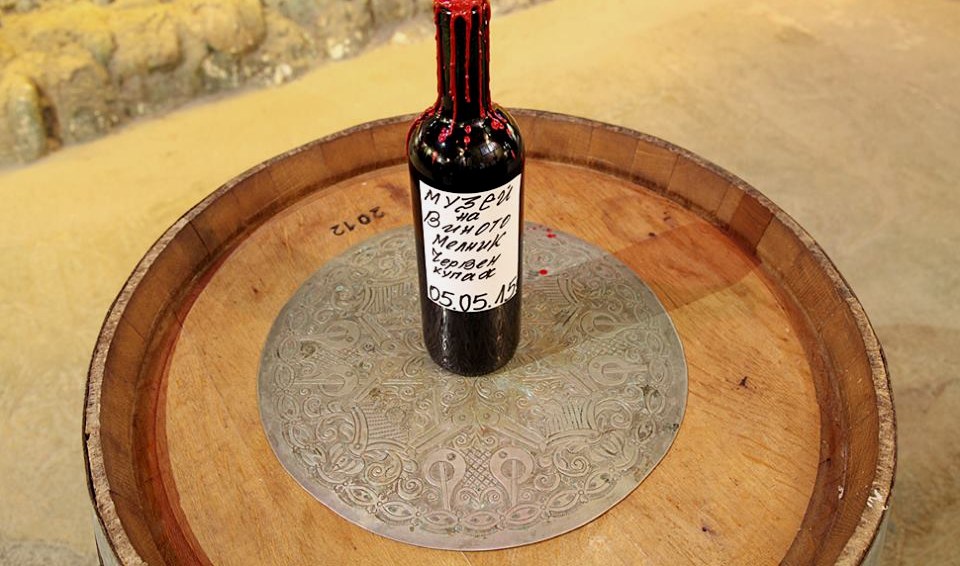
Some bottles come from a winery. This one comes from a cave underneath Bulgaria’s southernmost town, filled and sealed by hand in the exact kind of sandstone cellar this grape has been kept in for centuries.
History
Melnik’s old town is riddled with cellars carved directly into the local sandstone — a distinctive regional building technique tied to the town’s long wine trade, most famously in the 18th-century Kordopulov House, whose sandstone-cut cellar tunnels reportedly run for hundreds of metres. The Museum of Wine itself is a newer, smaller institution in that same tradition, established in 2013 in a cave space in the centre of town, where wine is still bottled and sealed with wax by hand rather than on an industrial line. There’s a well-worn local story that Winston Churchill was so fond of Melnik wine that he had barrels shipped to him every year — it’s repeated constantly in guides to the town, but it’s exactly that: a repeated story, not something I could trace to any actual historical record. Worth enjoying as folklore rather than treating as fact.
Region & terroir
Melnik sits in the Struma River Valley, Bulgaria’s southernmost and warmest wine region, in the shadow of the Melnik Earth Pyramids — sandstone formations shaped by millions of years of erosion, unrelated to the town’s wine history but part of the same striking landscape. The valley’s Mediterranean-leaning climate and long, stable autumns are exactly what a late-ripening, temperamental grape like this one needs to fully ripen.
The grape
Shiroka Melnishka Loza — literally “the broad-leaved vine of Melnik,” named for its large, rough leaves — is about as geographically confined as a wine grape gets: it’s cultivated almost exclusively in this one small pocket of southwestern Bulgaria, and repeated attempts to grow it successfully elsewhere are said to have failed. Traditionally it’s grown low and unstaked, in a bush or goblet shape close to the ground rather than trained onto wires, a method some producers in the area still maintain on small heritage plots. On its own the grape naturally gives fairly light colour with high tannin and acidity — traits that made it the starting point, in a 1960s Bulgarian breeding programme, for an entire family of modern crosses (Melnik 55, Melnik 1300, and others) bred to ripen earlier while keeping some of the original’s character.
Winemaking
Made as a rosé rather than the deeper reds this grape is more traditionally associated with, this wine takes a naturally structured, tannic variety and treats it with a lighter hand — short skin contact rather than extended maceration, aiming for freshness and drinkability over the grip and structure Shiroka Melnishka Loza shows in its red form. Bottling and wax-sealing by hand, on-site in the museum’s cave cellar, is as much a piece of local wine culture as it is a production method.
Tasting notes
Nose: Pale pink in the glass, with red berry, wild strawberry, and a faint earthy, mineral undertone.
Palate: Light and fresh, red fruit carried by brisk acidity, with a little more structure underneath than a typical rosé thanks to the grape’s naturally tannic character.
Finish: Clean and medium in length, more savoury than sweet.
Serving & pairing
Serve well-chilled, around 8–10°C. It’s an easy match for grilled vegetables, soft cheese, or simple grilled fish — a warm-weather wine built for the table rather than for ageing.
Why it’s in the cellar
This bottle is as much a souvenir as it is a wine — hand-filled in a sandstone cave, from a grape that quite literally cannot be grown anywhere else on earth. It’s in the cellar because some bottles are worth keeping for where they came from as much as what’s in them.