Red · Bulgaria
Cabernet Sauvignon Special Reserva
Vinex Slavyantsi — Thracian Valley · 2007
- Grape(s)
- Cabernet Sauvignon
- Vintage
- 2007
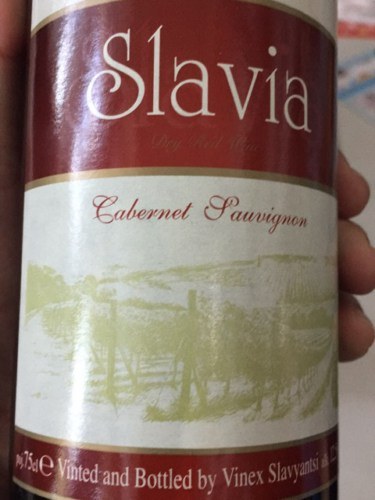
Nearly two decades ago, this bottle would have been just another commercial Bulgarian Cabernet — solid, unremarkable, one of thousands. Time is the only thing that’s made it interesting.
History
Vinex Slavyantsi traces its roots to 1898, part of a tradition of village cooperative wineries in eastern Bulgaria that were nationalised and consolidated under state control around 1950 — the same pattern that swallowed most of the country’s wine industry through the Communist era. It was privatised in 1995, becoming employee-owned, and is now one of Bulgaria’s larger wine producers and exporters, built around several cellars across its home region.
Region & terroir
Vinex Slavyantsi is based in the Sungurlare Valley, part of Bulgaria’s Sub-Balkan wine region — sometimes loosely grouped with the broader Thracian winegrowing areas in casual usage, though it’s technically its own distinct sub-region rather than the Thracian Valley proper. To understand a bottle like this, the more useful context is Bulgaria’s wine history overall: by 1980 the country was the world’s fourth-largest wine producer and the largest in the Eastern Bloc, built substantially on mass-produced Cabernet Sauvignon and Merlot sold to the Soviet Union and beyond under their international varietal names — Bulgaria is often credited as one of the first countries to market wine that way, by grape rather than by region. When Gorbachev’s 1985 anti-alcohol campaign gutted that Soviet export market, and the industry was privatised after 1990, a long, uneven rebuild toward quality-focused winemaking began — a rebuild Vinex Slavyantsi’s own 1995 privatisation sits squarely inside.
The grape
Cabernet Sauvignon was one of the flagship varieties of Bulgaria’s Communist-era export boom precisely because its name was internationally recognisable and its wine reliably solid rather than exceptional — sturdy, structured, built for consistency across huge volumes rather than for individual vineyard expression. What’s unusual about this particular bottle isn’t the grape, it’s the age: a commercial-tier Bulgarian Cabernet from a mid-size producer, still in the cellar nearly twenty years after it was made.
Winemaking
I couldn’t find independent tasting records for this specific vintage — which, honestly, tells its own story. A wine like this wasn’t made to be tracked by critics or written up for posterity; it was made to be sound, drinkable, and exported in volume. What’s interesting now is simply what two decades does to a wine like that regardless: tannins that were probably firm and straightforward in youth have had years to soften and resolve, and whatever primary fruit it had has given way to the tertiary, savoury character that time brings to almost any well-stored red, regardless of pedigree.
Tasting notes
Nose: Leather, dried herbs, and tobacco — classic tertiary notes that come with age rather than with any particular winemaking choice.
Palate: Mellow, resolved tannins, faded red fruit now closer to dried fruit, with a savoury, autumnal character throughout.
Finish: Medium length, gentle and settled rather than structured — a wine well past its youth and comfortable there.
Serving & pairing
Serve at cool room temperature, decanted gently to check for sediment. It suits simple, savoury food — roasted vegetables, mild hard cheese, cured meats — nothing that needs a wine with much fight left in it.
Why it’s in the cellar
This bottle isn’t in the cellar because it’s rare or celebrated — it’s here as a time capsule, a genuinely ordinary wine from a specific, now-distant moment in Bulgaria’s wine history, kept just to see what nearly twenty years does to something that was never meant to be kept at all.