Spirit · Ireland
Very Rare 200th Anniversary 28 Year Old
Midleton — County Cork, Ireland
- Grape(s)
- Single Pot Still Irish Whiskey
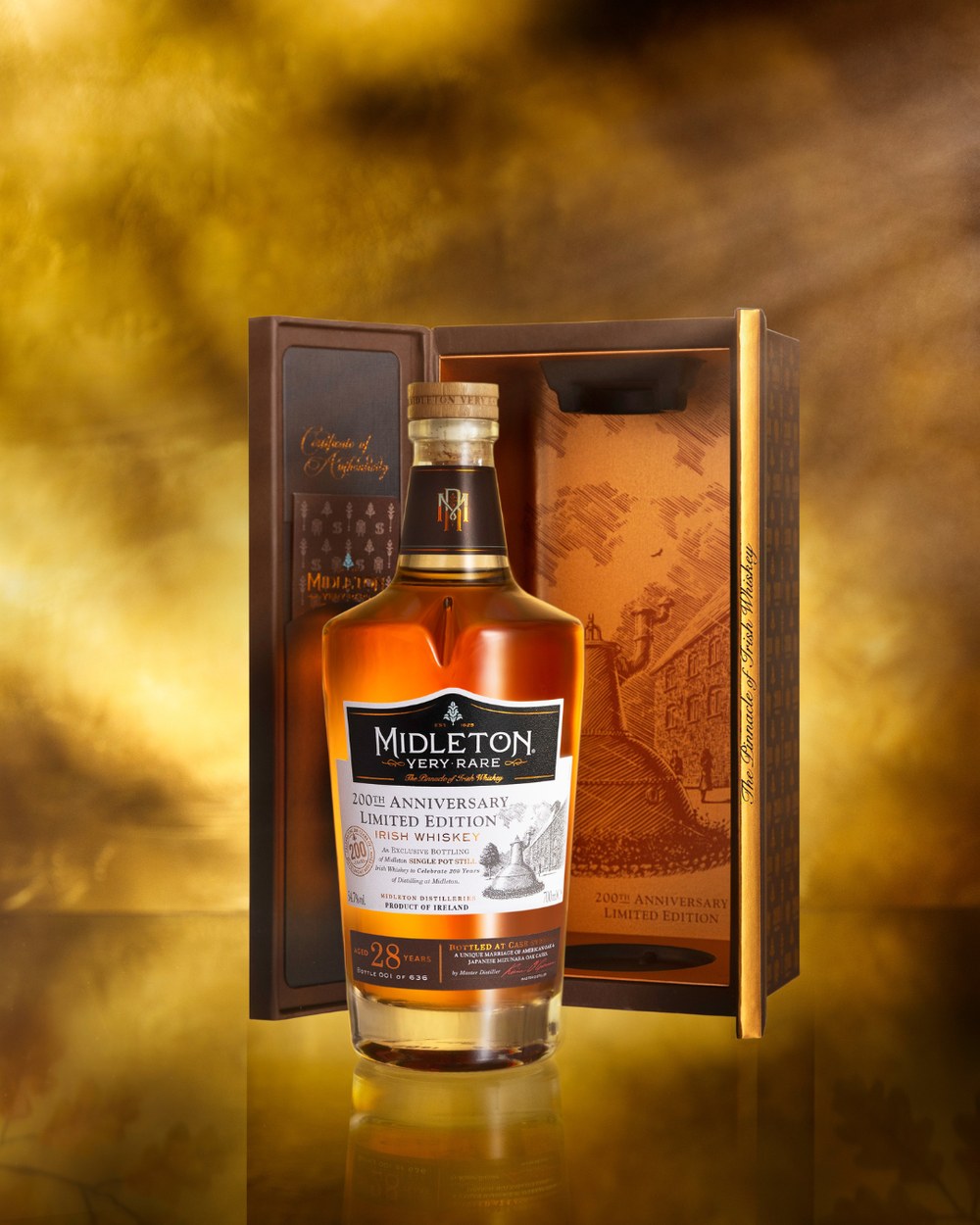
Two hundred years is a genuinely rare claim to make honestly, and this bottle is careful about exactly what it’s claiming. It’s not two hundred years of one distillery building — it’s two hundred years of distilling continuing on one site, which turns out to be a more interesting story anyway.
History
Old Midleton Distillery was founded on 20 December 1825, when the Murphy brothers — James, Daniel, and Jeremiah — bought a former woollen mill and military barracks in Midleton, County Cork, for £4,000 and converted it into a distillery. It operated on that site, later absorbed into the Cork Distilleries Company, until 1966, when Cork Distilleries merged with John Jameson & Son and John Power & Son to form Irish Distillers. The old distillery kept running until 1975, when a new, larger distillery was built right beside it to consolidate production for the merged companies’ brands; the original site closed and was eventually reopened purely as a visitor centre. So the distillery you’d tour today, the one actually making the whiskey, is only around fifty years old — but the tradition of distilling on that patch of ground in Midleton genuinely does stretch back to 1825, which is exactly what this 200th-anniversary release is marking.
Region & terroir
Midleton sits in East Cork, in a part of Ireland with a long distilling history — several of the old Cork-area distilleries that eventually merged into Irish Distillers were sited within a fairly small radius of each other, drawing on the same local grain-growing countryside.
The grape
This is Single Pot Still Irish whiskey, a style that’s genuinely distinct from single malt: the mash has to contain a minimum of 30% malted barley and 30% unmalted barley, with a small allowance for other cereals like oats. Historically, distillers added unmalted barley to dodge a British excise tax on malted grain; over time that workaround became a defining stylistic choice in its own right, giving the spirit a spicier, oilier character than a pure malt whiskey has.
Winemaking
Midleton Very Rare as a series was created in 1984 by then-Master Distiller Barry Crockett, continuing work his own father had done at the distillery before him, and every vintage since has carried his signature on the bottle — a new release every year without exception. This particular bottling goes much further than the standard annual release: a 28-year-old single pot still whiskey, drawn from a small number of selected casks representing different pot still styles within the distillery’s stock, released as the final, flagship expression marking the 200th anniversary of distilling on the Midleton site. An age statement that high is genuinely rare for Irish whiskey — the climate here means more is lost to evaporation each year than in a typical Scotch-ageing climate, so getting a cask to 28 years without losing it to the angels’ share at all is itself a kind of achievement.
Tasting notes
Nose: Ripe orchard and tropical fruit — pineapple, kiwi — layered with the spicy, oily backbone typical of pot still whiskey and a warm wood-spice note from extended cask ageing.
Palate: Rich and complex, dried fruit and baking spice over the characteristic pot still oiliness, with real depth built up over 28 years in wood.
Finish: Long, warm, and spiced, with a lingering woodiness that speaks to just how much time this spirit has had to develop.
Serving & pairing
Drink neat, in a proper tasting glass, and give it time to open up — a whiskey this old rewards sitting with rather than rushing through. It’s a whiskey for marking an occasion rather than an everyday pour, which is exactly the role it’s built for.
Why it’s in the cellar
This bottle exists because a distillery decided its own bicentenary deserved something that couldn’t be rushed — a whiskey laid down decades before anyone could be sure there’d be a two-hundredth anniversary to release it for. It’s in the cellar as a genuinely rare marker of that kind of long-term institutional patience.