Red · Bulgaria
Enira Reserva
Bessa Valley — Thracian Valley · 2018
- Grape(s)
- Merlot, Syrah, Petit Verdot, Cabernet Sauvignon
- Vintage
- 2018
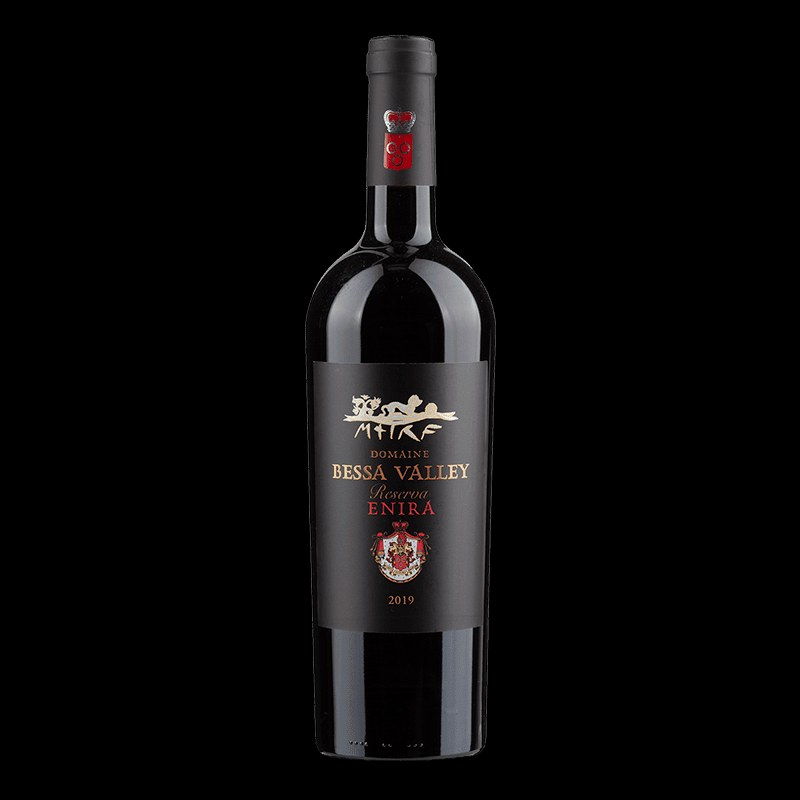
Every serious estate needs a wine that lets more people in the door, and Enira is Bessa Valley’s version of that — the same Bordeaux ambition as its flagship, made to be opened a few years sooner.
History
Bessa Valley was founded in 2001 near Ognyanovo, in Bulgaria’s Thracian Lowlands, by Count Stephan von Neipperg of Château Canon-la-Gaffelière in Saint-Émilion, together with investment partner Dr. Karl-Heinz Hauptmann. The estate takes its name from the ancient Thracian Bessi tribe once native to the area, and was assembled from roughly 800 individual smallholders’ plots into a single, purpose-built vineyard.
Region & terroir
The vineyard sits on clay-limestone soils on hills between the Rhodope Mountains and the Maritsa River — terroir von Neipperg reportedly selected for its resemblance to Saint-Émilion — under a continental climate of hot summers and cold winters that has given the Thracian Valley a strong reputation for structured, full-bodied reds.
The grape
Enira is Bessa Valley’s more accessible Bordeaux-style blend, led by Merlot and Syrah with smaller proportions of Petit Verdot and Cabernet Sauvignon rounding it out. Where Grande Cuvée is built from the estate’s most selective, lowest-yield fruit, Enira is the wine meant to introduce people to the estate’s style at a more everyday scale — still a genuine Bordeaux-informed blend, just made in far greater volume.
Winemaking
Each variety ferments separately before blending, then the wine spends 18 months in French oak, with around 30% of that oak new rather than the entirely-new regime used for the flagship Grande Cuvée — a lighter touch that suits a wine built to be approachable sooner rather than to be cellared for a decade.
Tasting notes
Nose: Plum, black cherry, and violet, with a gentle chocolate note from the oak.
Palate: Round and full, harmonious tannins rather than an aggressive grip, with the fruit doing most of the talking.
Finish: Medium-long and smooth, easy rather than demanding.
Serving & pairing
Serve at cool room temperature; it doesn’t need the long decant its bigger sibling does. Good with roast or grilled meats, pasta with a rich tomato or meat sauce, or a mild-to-medium cheese board.
Why it’s in the cellar
Not every bottle needs to be the estate’s most serious statement. This one’s in the cellar as the version of Bessa Valley’s ambition that’s actually ready to drink now, rather than the one still waiting for its moment.
More from Bessa Valley