Sparkling · France
La Grande Année
Bollinger — Champagne · 2014
- Grape(s)
- Pinot Noir, Chardonnay
- Vintage
- 2014
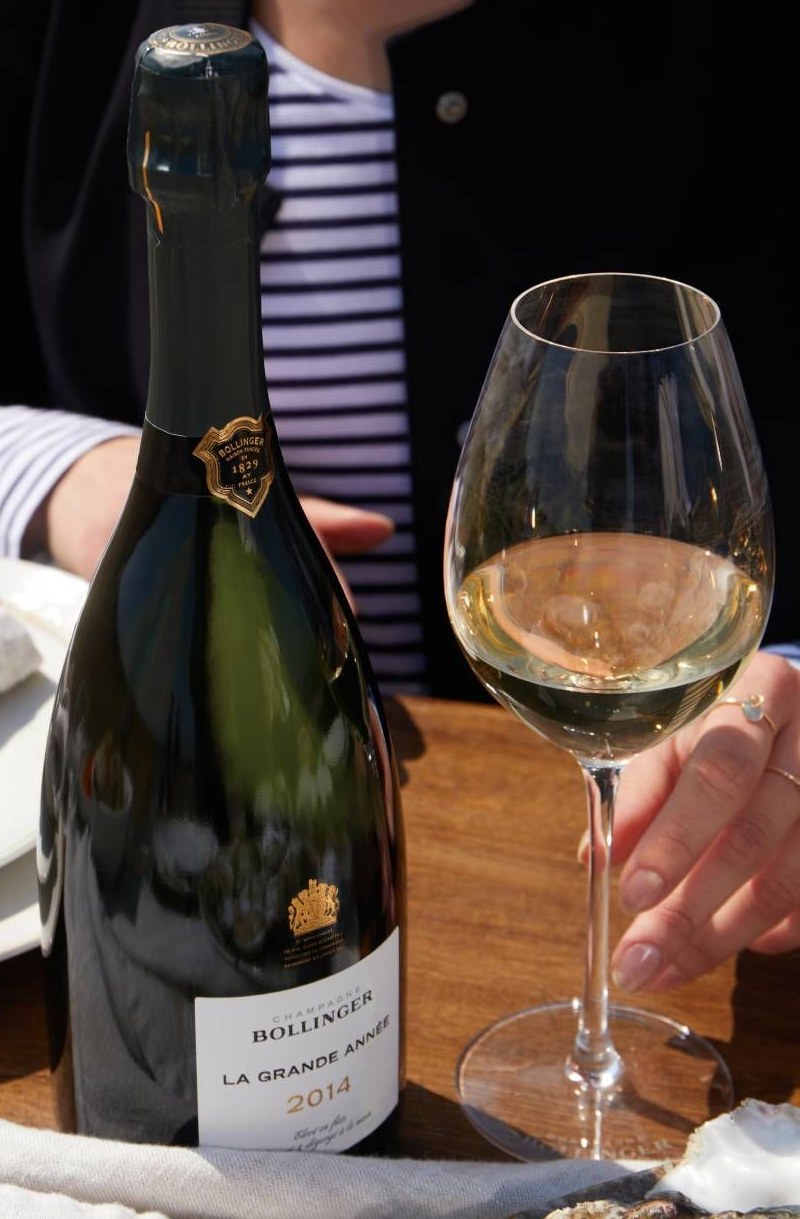
Some bottles get bought for an occasion. This one got bought because I couldn’t walk past it. Bollinger doesn’t release a vintage every year — only when the harvest earns it — and 2014 was one of the years it did. That restraint is most of why it’s in the cellar at all.
History
Bollinger was founded in 1829 in Aÿ, in the heart of the Marne valley, and has stayed a family-controlled house for almost two centuries — a rarity among the grandes marques, most of which now sit inside luxury conglomerates. The house became a name well beyond Champagne through an unlikely piece of branding: since Dr. No in 1962, Bollinger has been the Champagne of choice on screen for James Bond, a product-placement relationship so long-running it’s practically part of the house’s identity now.
What matters more to what’s in the glass is Bollinger’s vineyard holdings. The house owns roughly 180 hectares concentrated around Aÿ, Bouzy, and Verzenay — a large share of it Grand and Premier Cru — which means an unusually high proportion of the fruit in every bottle is estate-grown rather than bought in. For a house this size, that’s unusual, and it’s a big part of why Bollinger’s style stays so consistent from year to year.
Region & terroir
Champagne’s reputation rests on a genuinely marginal climate — this far north, ripening grapes at all is not a given, which is exactly why the region leans on secondary fermentation in the bottle to turn a thin, high-acid base wine into something worth drinking. Aÿ and the surrounding villages where Bollinger’s vines sit are Pinot Noir country: south-facing chalk slopes that give the variety enough warmth to ripen fully while the chalk itself does what chalk always does in Champagne — drains fast, reflects heat back onto the vines, and leaves the wines with a mineral, saline edge that’s hard to fake anywhere else.
2014 itself was not an easy vintage to make. A cool, wet summer gave way to a warm, dry September that saved the harvest — the kind of vintage where a producer’s fruit sourcing and selection standards matter more than the weather ever did. Houses that could afford to be choosy about which parcels went into their prestige cuvée generally did well; Bollinger, sitting on those Grand Cru holdings, was one of them.
The grape
Where most Champagne houses lead with Chardonnay for elegance, Bollinger leads with Pinot Noir for structure — La Grande Année typically runs somewhere around 60–70% Pinot Noir to 30–40% Chardonnay, sourced almost entirely from Grand Cru sites. Pinot Noir is the harder of the two grapes to get right in Champagne’s climate: thin-skinned, prone to rot in a wet year, and unforgiving of underripe fruit, which turns green and herbaceous rather than fruity. Get it right, though, and it gives Champagne something Chardonnay alone can’t: weight, red-fruit depth, and a wine built to keep improving in bottle for a decade or more rather than being drunk on release.
Winemaking
Bollinger’s most distinctive habit — the one that shows up in every serious write-up of the house — is fermenting a substantial portion of its still base wines in small, old oak barrels rather than stainless steel, a practice most of Champagne abandoned decades ago as costly and hard to control. Barrel fermentation doesn’t add oak flavour so much as it adds texture: a rounder, slightly oxidative richness that gives Bollinger’s wines their characteristic weight.
The house also keeps an extensive reserve of older vintage wines stored in magnum under cork rather than crown cap — Bollinger calls this its réserve perpétuelle-adjacent library, and it’s used to add depth and continuity to the non-vintage blend. For a vintage-dated wine like La Grande Année, the base wines from the declared year are left to speak for themselves, then aged on their lees for roughly eight to ten years before disgorgement — considerably longer than most vintage Champagne, which is usually released after three to five. That extra lees ageing is where the toasted-bread, brioche character in a mature Bollinger vintage mostly comes from.
Tasting notes
Nose: Baked apple and quince up front, giving way to brioche, toasted almond, and a faint smokiness from the barrel-fermented base wines.
Palate: Full-bodied for Champagne, with real weight on the mid-palate — dark cherry and blood orange from the Pinot Noir, a saline, chalky minerality underneath, and a fine, persistent mousse rather than an aggressive fizz.
Finish: Long and savoury, drying slightly toward the end with a lingering note of roasted nuts. This is a Champagne built to be taken seriously at the table, not just poured as an aperitif.
Serving & pairing
Serve cooler than you’d think — around 8–10°C — and give it a proper glass, not a flute. A white wine glass or a tulip-shaped Champagne glass lets the aromatics actually open up; a flute just funnels the bubbles and wastes the wine’s structure. This isn’t a wine that needs decanting, but letting it sit in the glass for a few minutes before the first sip does it a real favour.
At the table, its weight and savoury edge make it far more food-friendly than a typical Brut: roast chicken, mushroom risotto, or hard cheeses like aged Comté all work. It’s also, frankly, good enough to drink entirely on its own.
Why it’s in the cellar
This isn’t a wine to open on a whim — Bollinger vintage Champagne rewards patience, and this one has years left in it. It sits in the cellar as a reminder that some of the best bottles aren’t the loudest or the rarest; they’re the ones made by someone who could have taken a shortcut and didn’t.