Red · Spain
Gran Reserva (Magnum)
Bodegas Riojanas — Rioja, Spain · 2017
- Grape(s)
- Tempranillo, Graciano
- Vintage
- 2017
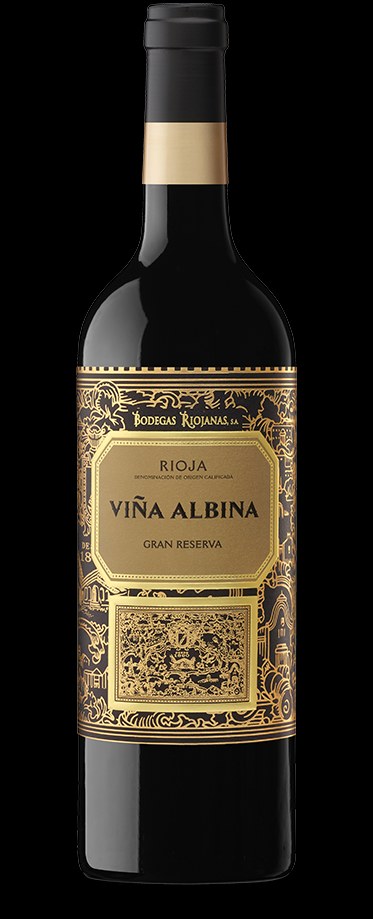
A magnum isn’t just a bigger bottle — it’s a decision to make a wine wait even longer than it already was going to. This one is a Gran Reserva, which already means years of patience before release, poured into a format that asks for still more.
History
Bodegas Riojanas was founded in 1890 in Cenicero, a small town in Rioja Alta whose railway station made it an important export point for the region’s wine in the late nineteenth century. The winery traces its roots further back than its formal founding — a stone doorway dated 1799, once the entrance to the family’s own vineyards, still stands at the estate — and the family’s wines had already won a gold medal at the 1888 Barcelona Universal Exposition before the company was properly incorporated. Like almost every Rioja producer of that generation, it lived through the phylloxera crisis that devastated the region’s vineyards around the turn of the century, survived it, and became the public company it is today in 1940.
Region & terroir
Cenicero sits in Rioja Alta, the cooler, higher-altitude of Rioja’s classic sub-zones, generally associated with more structured, longer-ageing wines than the warmer Rioja Oriental to the east. Rioja’s continental climate — moderated somewhat by the Atlantic influence funnelled in along the Ebro valley — gives long, warm-but-not-scorching growing seasons that Tempranillo, the region’s backbone grape, is built for.
The grape
Tempranillo carries the weight of almost every serious Rioja, but Graciano is the grape that keeps a wine like this honest over decades in the bottle. It’s a difficult variety to grow — low-yielding, awkward to ripen, which is exactly why most producers use it sparingly — but what it gives back is high natural acidity, deep colour, and a lifted, aromatic quality (violets, dark berries, a touch of spice) that pure Tempranillo doesn’t have on its own. In a blend built for the very long haul, that acid and perfume from Graciano is what keeps the wine feeling alive once the fruit itself has settled down.
Winemaking
Rioja’s Gran Reserva category is one of the more demanding classifications in wine: a minimum of five years’ total ageing from harvest before release, with at least two of those years in oak barrel and at least two more in bottle before the wine is allowed to leave the winery. In practice, serious producers hold their Gran Reservas well past that legal floor. What makes this particular bottle unusual is the format: magnum holds twice the wine of a standard bottle behind a cork of roughly the same size, which means the ratio of oxygen exposure to wine volume is effectively halved. The wine ages more slowly and more evenly as a result, and the larger volume also buffers it better against temperature swings in storage — which is the technical way of saying a Gran Reserva in magnum has more patience left in it than the same wine in a standard bottle.
Tasting notes
Nose: Dried red fruit, leather, and cedar from the extended oak ageing, with a lifted violet note from the Graciano threading through.
Palate: Silky, resolved tannins, redcurrant and dried cherry, a savoury edge of tobacco and dried herbs, all held together by real acid rather than sheer fruit weight.
Finish: Long and gently drying, with the Graciano’s brightness carrying the finish rather than letting it fade into flat oak.
Serving & pairing
Serve at cool room temperature, around 16–18°C, and give it time in the glass — a wine this age doesn’t rush. It’s a natural match for slow-cooked lamb, aged Manchego, or anything with real umami depth; the tannins are soft enough by now that it doesn’t need particularly fatty food to stand up to it.
Why it’s in the cellar
Buying a Gran Reserva in magnum is a bet that patience gets rewarded twice over — once by the classification, once by the format. It’s in the cellar because some occasions deserve a bottle that’s been waiting exactly as long as the moment is worth.